
Release Notes - 7th May, 2026
This release includes major enhancements across Audience Cloud, AI Moderator, AI Analytics, UX Research workflows, platform usability, and infrastructure improvements.
Highlights
- Expanded Audience Cloud capabilities and publishing workflows
- Improved multilingual AI Moderator interview experience
- Enhanced AI Analytics and unified Themes workspace
- New UX research and response collection capabilities
- Improved onboarding, validation, and configuration workflows
- Security, infrastructure, and compliance enhancements
- Platform-wide UI cleanup and usability refinements
New Features & Enhancements
1. Audience Cloud Improvements
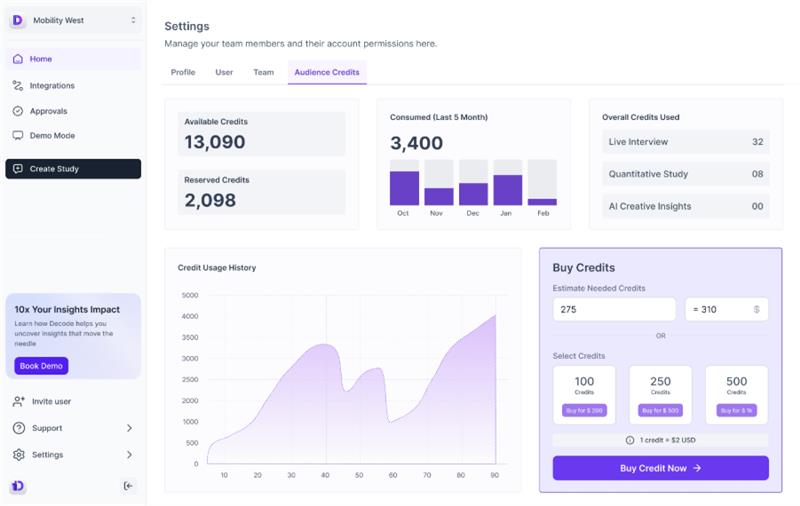
Credit Manager & Audience Credit Dashboard
- Added Audience Credits section within Settings to help teams track and manage available, reserved, and consumed credits.
- Introduced credit usage analytics and purchase flow for better visibility into audience consumption and operational planning.
- Improved credit management experience with dedicated credit purchase and monitoring workflows.
Audience Selection & Recruitment Flow
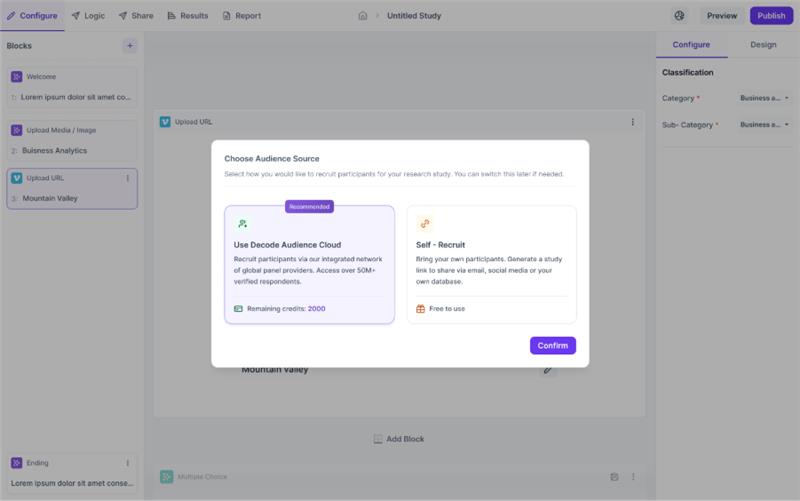
1. Introduced a new audience source selection flow during study setup.
2. Researchers can now choose between:
- Decode Audience Cloud for panel recruitment
- Self-Recruit option for sharing studies with their own participants
3. Improved participant recruitment experience with clearer audience selection and study publishing workflows.
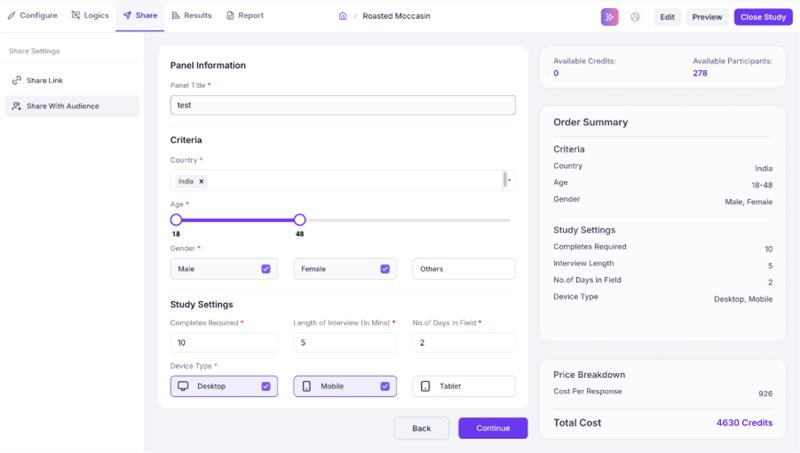
Audience Criteria & Cost Configuration
Introduced real-time order summary and credit estimation visibility during audience setup.
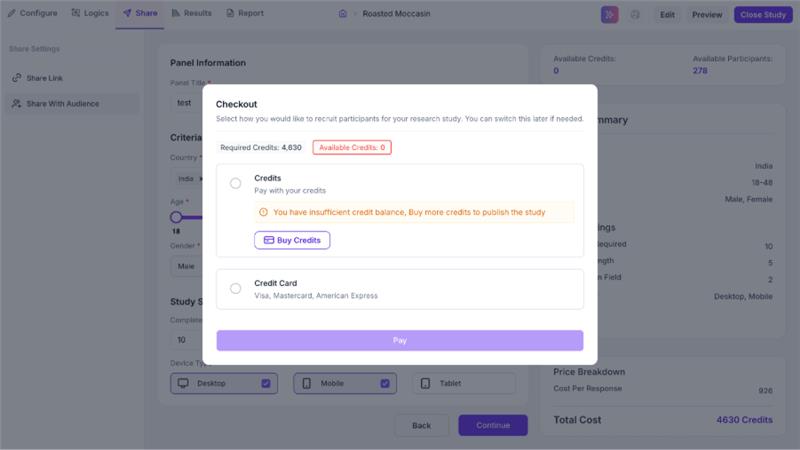
Credit Validation & Checkout Experience
- Added credit validation during study publishing workflow.
- Researchers are now notified when sufficient audience credits are unavailable before checkout.
- Introduced streamlined checkout and credit purchase flow to improve publishing reliability and reduce failed publishing attempts.
Vendor Control & Integrations
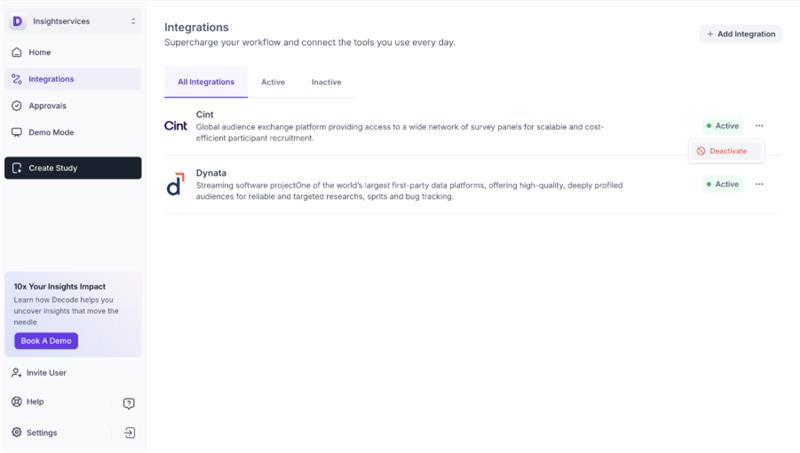
- Added vendor management controls within Audience Cloud integrations.
- By default, Cint and Dynata integrations are available and active for audience recruitment.
- Clients can now activate or deactivate specific audience vendors based on their recruitment preferences or operational requirements.
- Improved flexibility and control over panel provider management workflows.
2. AI Moderator Enhancements
Expanded Indian Language Support
- Added support for additional Indian languages within the AI Interview language selection flow.
- Researchers can now conduct multilingual qualitative interviews more effectively across regional audiences.
- Improved accessibility and participant comfort for non-English interview experiences.
3. AI Analytics & Research Intelligence
Unified Themes Workspace
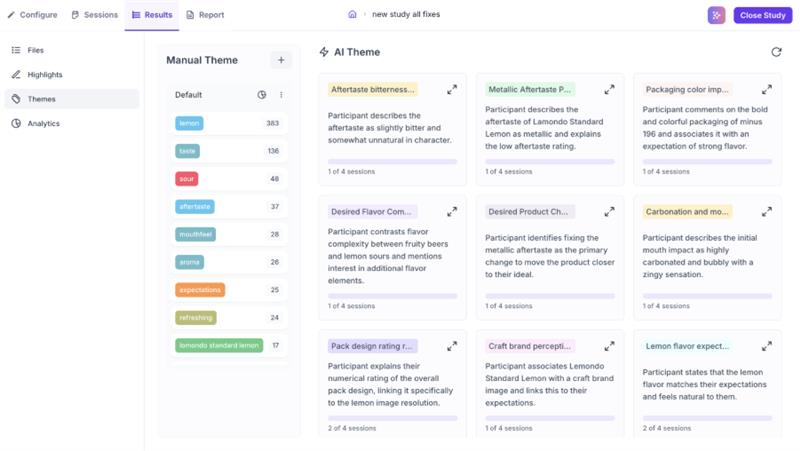
- Introduced a unified Themes workspace by bringing both Manual Themes and AI-generated Themes into a single analysis view.
- Researchers can now create, manage, and analyze manual and AI themes together within one centralized workspace.
- Improved thematic analysis workflow with better organization, easier navigation, and streamlined insight management across qualitative studies.
4. Benchmark Analytics Enhancements
- Added benchmark score calculation support across all study categories.
- Enables more standardized comparative analytics and category-level benchmarking.
- Improved consistency and reliability of benchmark-driven research insights.
5. UX Research & Study Experience
Image Response Block
- Added support for Image Response blocks within UX research studies.
- Participants can now upload and respond using images as part of study tasks and feedback collection.
- Enables richer visual feedback and improves qualitative understanding during UX evaluations.
Prototype Import Enhancements
- Improved prototype import workflows and usability for design-based studies.
- Enhanced handling and compatibility for imported prototype experiences.
- Simplified setup process for UX and product research teams conducting prototype testing.
6. Platform Experience & UX Improvements
Configuration Page Redesign
- Refined configuration workflows with improved layout, navigation, and usability enhancements.
- Removed unused and redundant UI elements to simplify the study setup experience.
- Introduced a cleaner dashboard-first design approach for improved workflow clarity and faster researcher navigation.
Signup Flow Improvements
- Added enhanced email validation during signup and onboarding workflows.
- Improved onboarding reliability and reduced invalid or incomplete account registrations.
- Enhanced user verification experience during account creation.
7. Security & Infrastructure
Enhanced System Stability & Future-Proofing: Optimized PII redaction workflows and upgraded AI infrastructure to support newer models, ensuring more reliable data privacy handling and long-term platform scalability.
Impact Summary
This release significantly enhances the Decode platform by improving audience recruitment workflows, multilingual AI interview capabilities, AI-powered analytics, and overall research usability. The updates streamline study setup and publishing experiences, strengthen qualitative insight generation, and provide researchers with more advanced audience segmentation and thematic analysis capabilities.